
‘Les Paul’s’ (The Paul’s) are both ex-Londoners, singer songwriter, multi-instrumentalist, composer, producer and actor Paul Odiase and song lyricist and producer Paul Robert Thomas. Check out the electronic press kit for Les Pauls at this link: https://www.paullyrics.com/les-pauls-the-pauls-epk
‘Les Paul’s’ (The Paul’s) Electronic Press Kit is at https://www.paullyrics.com/les-pauls-the-pauls-epk
Their main website is https://www.paullyrics.com/les-pauls-the-pauls-official-homepage and their Facebook page is https://www.facebook.com/LesPaulsThePauls and they are on many platforms including Bandcamp at https://lespaulsthepauls.bandcamp.com
‘Les Paul’s’ (The Paul’s) are independent unsigned artists with their songs being released by Paul’s own net label, Swiss Cottage Recordz, and with Publishing by Studio City’s Unlimited Sounds Publishing LLC in conjunction with the Uk’s Budde Music Ltd.
Thank you, Paul!
Stormy Weather interview
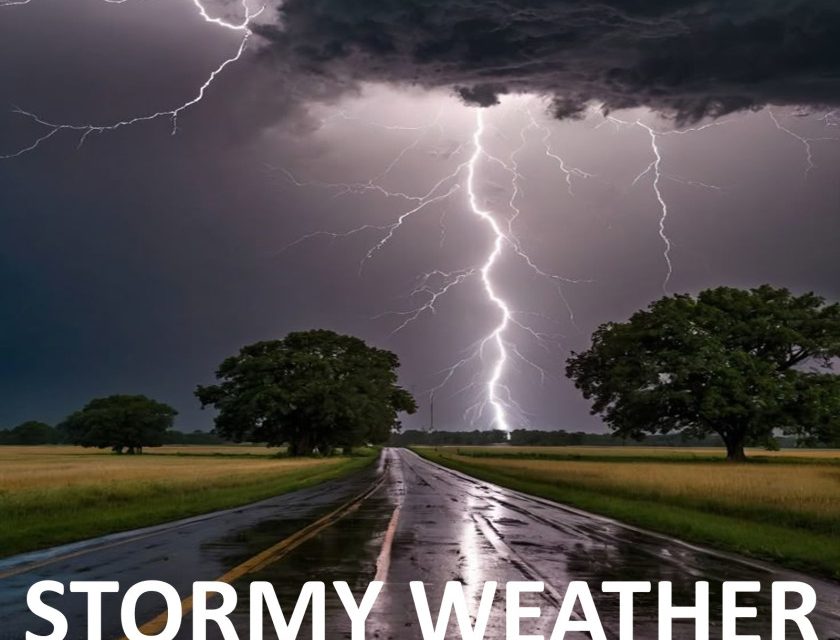
‘Les Paul’s’ (The Paul’s) 30th album Stormy Weather released 4 March 2026, is a contemporary album of relevant songs about the dangers of what is happening in the world today – from Iran, to broken relationships, to an egoistic world leader, of hate fueled by paid influencers, to the everyday evils of social media.
Track 1 – Stormy Weather is the album’s title track and engenders a sense of being lost in time and space and confused in this modern world, as a storm is blowing inside causing turmoil and emotional chaos. Feeling physically with someone but emotionally disconnected and alone. Living with someone as cold as a corpse you’re lying next to in your bed, as the spirits in the wind howl through the trees outside telling you to move on, but it’s hard to separate even as you watch your life disintegrate and as you try to get answers from your partner about why they weren’t as true to you as you were to them?
Track 2 – I Can Tell explores themes of social injustice, political satire, moral conflict, or personal awakening in the face of systemic abuse. It is a dark, incisive protest song that confronts hypocrisy, corruption, and moral blindness in modern society. Through striking imagery and sharp social commentary, the lyrics expose false leaders, institutional greed, and the commodification of faith, health, and human suffering. Repeating the question “Can’t you tell?” as both challenge and accusation, the song contrasts awareness with denial, urging listeners to see beyond deception and propaganda.
Track 3 – The Rough and Rowdy Sea is a cautionary protest anthem that uses the ocean as a metaphor for the relentless, cyclical nature of human hatred. The lyrics describe a world where social media influencers, misguided youth, and shadowy puppetmasters fuel a rising tide of vitriol and misinformation.
The song connects modern political unrest to historical trauma, specifically referencing the Holocaust and the erasure of history, to warn that society is repeating the same deadly patterns. It concludes with an urgent, redemptive plea for individuals to break the cycle of “blind hate” through self-reflection and a return to basic human empathy before the metaphorical tide swallows everyone.
The transition from the darkness of the first half of the song to the hope of the ending is very stark. The song moves from a sense of total drowning to a call to action that feels almost like a spiritual intervention. By using the A-B-C simplicity at the end, it is suggested that while the puppet masters make hate look complex, the solution—love and humanity—is actually the simplest thing in the world. The line “Angry pacifists in the square screaming for blood” is a particularly sharp oxymoron. It perfectly captures the irony of modern movements that often become the very thing they claim to oppose.
Track 4 – The Wicked Wind is a cautionary, apocalyptic anthem that blends socio-political commentary with dark, metaphorical imagery. The lyrics paint a picture of an encroaching, corrupting force, represented by a “wicked wind from the east” that threatens to dismantle the foundations of society and the physical self.
The permanent overcast sky suggests a world that has lost its warmth and clarity. Ultimately, it is a rallying cry for collective resistance against a metaphorical storm that thrives on weakness and division.
Track 5 – I Used To Do Those Things is a song about reaching the final phase of your life and reflecting upon your past and the things that you once did in your youth but that you no longer do, or desire to do. You acknowledge the wrong road you were on, even though ‘forbidden fruit’ tasted sweet you realize that you have changed and that the sins of your youth are in the past as you strive to live a decent life as you head towards the closing door as the clock ticks on and on and you ask for forgiveness. You tried religion but didn’t find solace or answers there as you look to calm the storm and find peace in your final days that remain.
Track 6 – It’s Another Wasted Year highlights the frustration of making the same New Year’s resolutions year after year, only to end up back in the same emotional hole that you can’t escape from where your screaming and shouting for help goes unheard. You realize that despite your hopes of making a fresh start, nothing has changed, your relationships fail and you cry out for change but are incapable of making the changes to your life that are needed, and life drags slowly on the same as before.
Track 7 – You Sold Me Out is a song about being betrayed by someone close to you. The song references Judas Iscariot betraying Jesus to the Romans (albeit that Jesus had instructed Judas to betray him in order to fulfil the messianic prophecies). It also reflects upon the impact the actions of Judas would have upon future generations of Jews, ‘with signs upon their doors’, the mezuzah, who were persecuted and murdered because of the assertions that they were responsible for the death of a fellow Jew, Jesus, and who still are being persecuted and murdered to this day partly on that pretext.
Track 8 – The Silence For Iran is a visceral, politically charged anthem that critiques the global community’s perceived apathy toward the struggle for freedom in Iran. The lyrics draw a sharp, haunting contrast between the violent reality on the ground—where “streets flow crimson red”—and the eerie stillness of Western observers. The song delves into themes of hypocrisy and selective activism, suggesting that international outrage is often manufactured rather than genuine humanitarian concern. By comparing the blatant modern-day “slaughter of dissidents” to historical atrocities, the lyrics challenge the listener to confront their own “deafening silence.” It is a powerful call to action, demanding that humanity trades its indifference for empathy and its quietude for a collective shout against tyranny.
Track 9 – Guilty Clicks dives into the digital courtroom of social media where victims are found guilty by unseen web-judges encouraged by the unseen web-jury voting on their guilt with clicks. The impact and consequences can have life-changing impacts on those victims who are chosen for whatever reasons, usually because of rumour and misinformation, and has led to character assassination and people’s reputations being destroyed, and in some cases has directly led the victims to commit suicide. In this dark world of web-justice the term ‘innocent until proven guilty’ doesn’t apply and the victims’ are forever ostracized and their appeals against the verdicts are usually met with posted laughing emojis and with disdain.
Track 10 – Time To Change is a call to everyone to change their ways, their mind, heart and direction. It is the central theme of the bible, and the repeated biblical term used and recognized by most is to repent. It is mentioned 106 times throughout the bible. You can change and leave your past wrongdoings behind you and be born anew, and then try to lead a good life where past mistakes and sins are not repeated. The process of repentance involves first realizing that you are on the wrong path, acknowledging your past wrongdoings and sins, wanting to change your life for the better and vowing to yourself not to repeat past wrongs. The song reminds us that our time on this earth isn’t long, that life is short and we never know where or when it will end.
FOLLOW Paul Robert Thomas, lyricist at ‘Les Paul’s’ (The Paul’s) ON: FACEBOOK | TWITTER | INSTAGRAM | YOUTUBE | WEBSITE